Bladeless, stitch-free micro-incision cataract surgery performed as day-care by Dr. Charu Mithal — with unhurried counselling on which intraocular lens actually suits the way you live, not the one with the biggest margin.
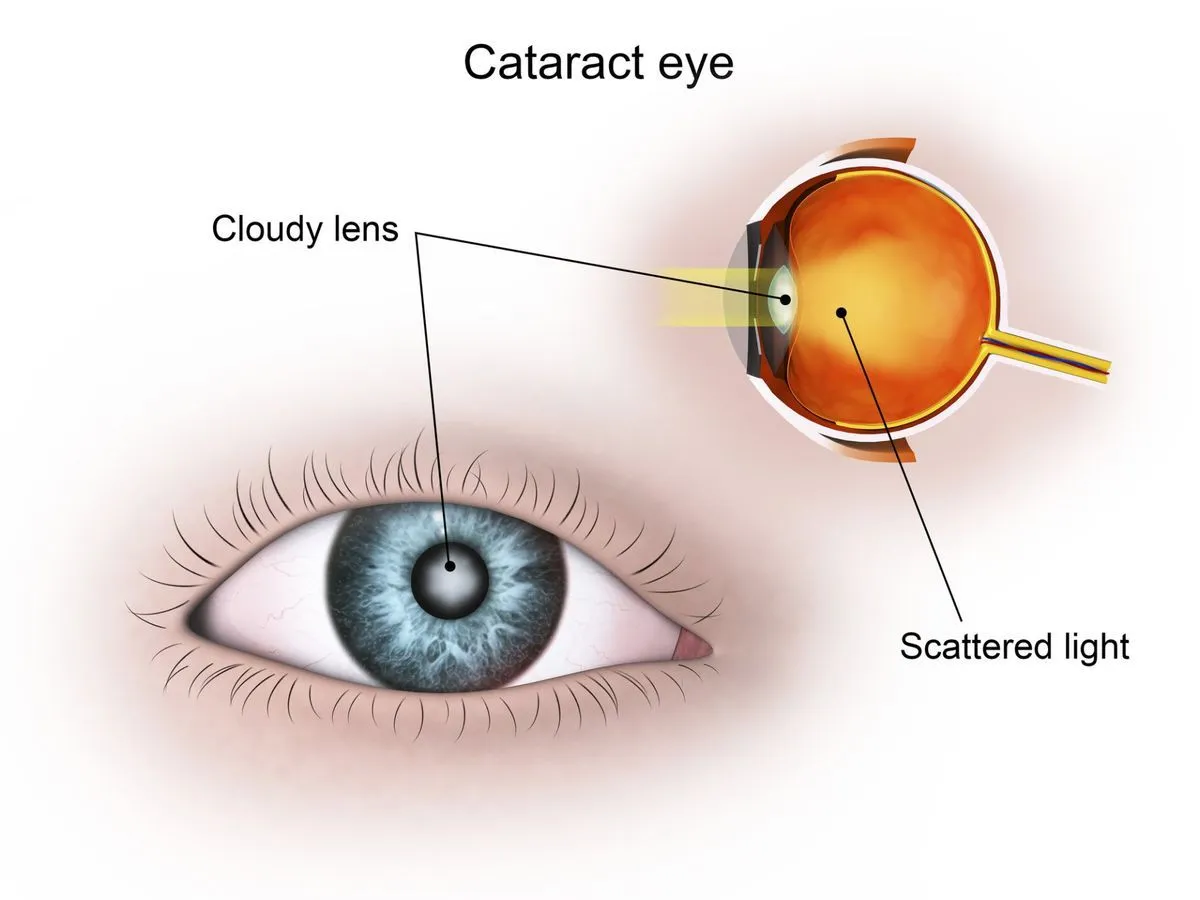
The natural lens inside your eye sits behind the iris and focuses light onto the retina. With age, the proteins in that lens clump together and it turns cloudy — that cloudiness is a cataract. Light scatters instead of focusing, and vision becomes hazy, faded and increasingly difficult in low contrast conditions.
Cataract is the single largest cause of reversible blindness in India, and it is almost entirely age-related, though diabetes, long-term steroid use, eye injury, high myopia and prolonged unprotected sun exposure all bring it on earlier. There is no eye drop, tablet or exercise that dissolves a cataract. The only definitive treatment is surgical removal of the cloudy lens and its replacement with a clear artificial intraocular lens (IOL).
The old advice to wait until a cataract is fully mature is outdated and, frankly, harmful. A hard, over-ripe cataract needs more ultrasound energy to break up, stresses the delicate corneal endothelium, and carries a higher risk of complications. Modern practice is to operate when the cataract begins to interfere with what you want to do — reading, night driving, recognising faces, working at a screen.
Equally, not every cataract seen on examination needs an operation today. If your vision is still comfortable for your daily activities, monitoring is entirely reasonable. Dr. Mithal will tell you plainly which situation you are in.
Micro-incision phacoemulsification through a 2.2 mm self-sealing incision — no stitches, no hospital stay.
Symptoms that suggest a cataract
Cataracts develop slowly, and most people adapt without realising how much vision they have lost until it is measured. These are the common complaints:
Cloudy, hazy or misty vision
Glare and halos around headlights at night
Colours appearing faded or yellowed
Frequently changing spectacle power
Difficulty reading in dim light
Double vision in one eye
Needing brighter light for close work
Temporary improvement in near vision (second sight)
Types of cataract we treat
Age-Related (Senile) Cataract
The commonest form, usually after age 55. Nuclear sclerotic, cortical and posterior subcapsular subtypes each progress differently — posterior subcapsular cataracts in particular cause disproportionate glare and can affect people much younger.
Diabetic Cataract
Diabetes accelerates cataract formation by years. These eyes also need careful retinal assessment before surgery, because diabetic macular oedema left untreated will limit the visual result no matter how perfect the cataract surgery.
Traumatic Cataract
Following blunt or penetrating eye injury, sometimes years later. Often accompanied by weak zonular support, which needs a capsular tension ring and a surgeon comfortable with complicated cases.
Congenital & Paediatric Cataract
Present at birth or developing in childhood. Requires urgent attention because the visual pathway is still forming and delay causes permanent amblyopia.
Complicated & Post-Vitrectomy Cataract
Following uveitis, retinal surgery or long-term steroid use. These eyes behave differently on the table and benefit from a surgeon with vitreo-retinal training.
Hypermature Cataract
A long-neglected, rock-hard or liquefied cataract. Still operable, but technically demanding and better managed before it reaches this stage.
How cataract surgery is performed
Modern cataract surgery is phacoemulsification — the cloudy lens is broken into fragments with ultrasound and aspirated through an incision small enough that it seals itself without a stitch. Here is the pathway from first visit to final review:
Detailed Examination
Vision testing, slit-lamp assessment of the cataract's density and type, intraocular pressure, and a dilated retinal examination. If the retina cannot be seen through a dense cataract, a B-scan ultrasound confirms it is healthy underneath.
Optical Biometry & IOL Selection
Precise measurement of your eye's axial length and corneal curvature calculates the exact lens power. This is where accuracy matters most — a good measurement is the difference between needing glasses afterwards and not.
Lens Counselling
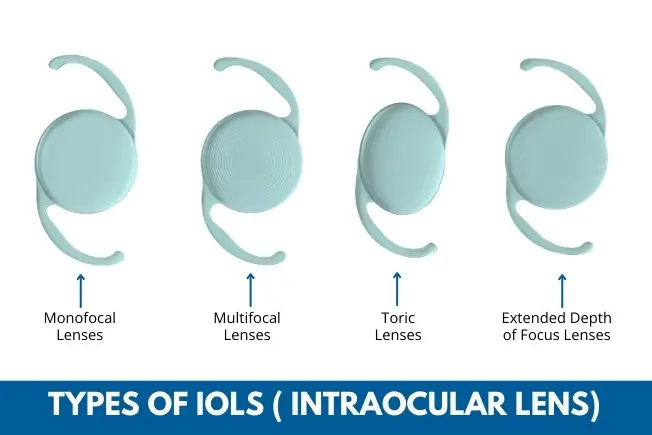
An honest discussion of monofocal, toric, EDOF and trifocal options against your work, hobbies, driving habits, budget and tolerance for night-time glare. No pressure to take the premium option if a monofocal serves you better.
Pre-Operative Preparation
Blood sugar, blood pressure and cardiac fitness are confirmed. Antibiotic drops start a day or two before. You may eat a light meal — general anaesthesia is not used.
The Surgery
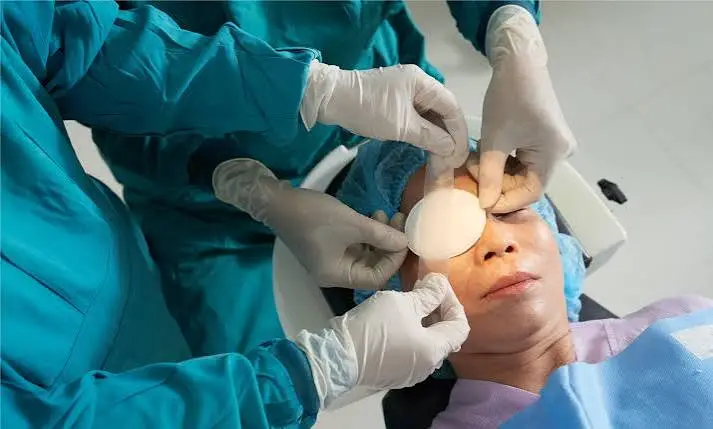
Under topical anaesthetic drops, a 2.2 mm incision is made, the front capsule opened, the lens emulsified and aspirated, and the folded IOL injected into the capsular bag where it unfolds into position. Fifteen to twenty minutes per eye, and you go home the same day.
Same-Day Discharge
A protective shield is placed. You will be given a drop schedule and a review appointment for the next morning. Most patients notice clearer vision within hours as the drops wear off.
Follow-Up Reviews
Day one, week one and around week four. The second eye is usually operated one to three weeks after the first, once the surgeon is satisfied with the first eye's healing.
Lens choice is the decision that shapes your result. Monofocal, toric, EDOF and trifocal each suit a different way of living.
Recovery after cataract surgery
Recovery is quick and generally comfortable. Mild grittiness, watering and light sensitivity for a few days are normal. Vision is usually functional the very next day, and settles fully over four to six weeks as the eye stabilises and the final spectacle prescription is given.
The drops matter more than the rest — antibiotic and anti-inflammatory drops on a tapering schedule prevent the two things that spoil an otherwise perfect surgery: infection and inflammation.
Use all prescribed drops exactly on schedule, tapering as directed
Wear protective glasses outdoors and the shield at night for the first week
Avoid rubbing or pressing the eye at any time
No swimming, saunas or dusty environments for four weeks
Avoid heavy lifting and strenuous exercise for two weeks
Bending forward and normal household work are fine from day two
Final spectacle prescription is given at around four weeks
Report sudden pain, redness or dropping vision immediately
Cataract surgery cost in Delhi
The single largest variable in cataract surgery cost is the intraocular lens. The surgery itself is broadly the same; what changes is what you implant and what the hospital tariff is. Indicative ranges in Delhi NCR:
Toric monofocal IOL (corrects astigmatism)₹50,000 – ₹80,000 per eye
EDOF / extended depth-of-focus IOL₹70,000 – ₹1,10,000 per eye
Trifocal IOL (distance, intermediate and near)₹90,000 – ₹1,50,000 per eye
Trifocal toric IOL₹1,10,000 – ₹1,75,000 per eye
Cashless insurance (most policies after waiting period)Covered for medically indicated surgery
Indicative ranges for Delhi NCR as a guide only. Your written estimate is given after examination and depends on the technology, lens or drug used, hospital tariff and insurance cover. Most procedures are supported by cashless insurance at Max hospitals.
Why choose Dr. Charu Mithal for cataract surgery
Vitreo-Retinal TrainedA surgeon who also operates on the retina reads the back of your eye before touching the front — and knows how to handle a cataract case that turns complicated.
No Premium Lens PushYou are told honestly when a monofocal will serve you better than a trifocal, and what the night-glare trade-off of multifocal lenses actually feels like.
Accurate BiometryOptical biometry and careful IOL power calculation, because a beautiful surgery with a wrong lens power is still a disappointment.
NABH Hospital TheatresSurgery performed at Max Smart Saket and Max Panchsheel Park with full sterility protocols and cashless insurance support.
Frequently asked questions
Is cataract surgery painful?
No. The eye is numbed with anaesthetic drops, and most patients describe a sensation of pressure and bright light rather than pain. You stay awake, but you will not see the instruments. Some patients receive a mild sedative if they are anxious. Discomfort afterwards is limited to mild grittiness for a few days.
How long does cataract surgery take?
The surgery itself takes 15 to 20 minutes per eye. Including preparation, dilation and post-operative observation, plan to be at the hospital for about three to four hours. It is day-care surgery — no overnight admission is required.
Which intraocular lens should I choose?
It depends entirely on your daily life. A monofocal lens gives excellent distance vision but you will need reading glasses. A toric lens additionally corrects astigmatism. EDOF lenses give good distance and intermediate vision, useful for screen work. Trifocal lenses give spectacle independence at all distances but carry a higher chance of night-time halos, which matters if you drive at night for a living. Dr. Mithal will map these against how you actually spend your day.
When can I go back to work after cataract surgery?
Desk work and light activity can usually resume in two to three days. If your work involves dust, heavy lifting or physical strain, allow two weeks. Screen use is fine from day two, though your eyes may tire more quickly at first.
Can a cataract come back after surgery?
The cataract itself cannot return, because the natural lens has been removed. However, in some patients the thin membrane holding the implanted lens can turn hazy months or years later — this is called posterior capsular opacification. It is treated in a couple of painless minutes with a YAG laser in the outpatient clinic, and does not recur.
Is both-eye cataract surgery done on the same day?
Generally no. In India the standard practice is to operate one eye first, confirm healing at review, and operate the second eye one to three weeks later. This is safer and lets you function with the first eye during recovery.
Does insurance cover cataract surgery in Delhi?
Yes, most health insurance policies cover cataract surgery once the policy waiting period is completed, though many cap the amount payable per eye. Premium lens upgrades are often paid partly out of pocket. Cashless facilities are available at Max hospitals — share your insurer's name at booking so pre-authorisation can begin early.
What if I also have diabetes or glaucoma?
Cataract surgery is still very much possible and often improves both examination access and pressure control. What changes is the workup: your retina is assessed for diabetic macular oedema and your optic nerve for glaucoma damage beforehand, because these determine how much vision you will actually recover. Being told this honestly before surgery is far better than discovering it after.